Content

tagged: qmat

nine month review » a title and 10+k words

three things you don’t want together: wedding organisation, alt-wedding organisation, and writing the first-year dry-run of your PhD thesis. all so important in life; all epic on the deadline front, all with just a week between them.

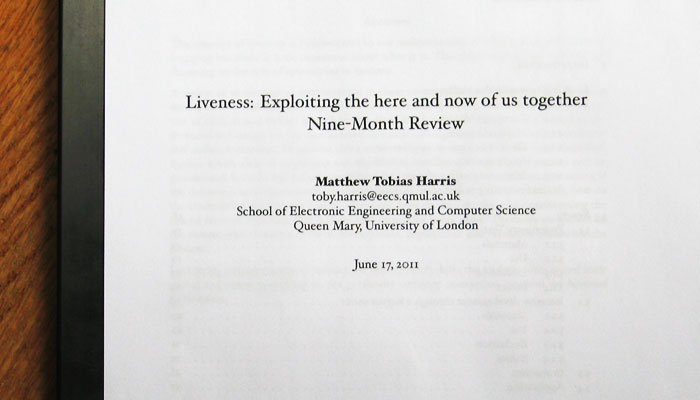
first to pass: the PhD nine-month review. 10+k words, finally a title i’m happy with, and most importantly, in it a coherent research programme that articulates both the bigger picture of why i got into this in the first place and the concrete in what i am going to study. liveness is a nebulous topic, and it has been quite the journey to get to this point.

the abstract is possibly the worst thing to put here, as it was the last thing to be re-written and i was beat by that point, but it gives the flavour. and in archiving this here, when the PhD is further along i can look back an wince…

Liveness: Exploiting the here and now of us together
The concept of liveness is fundamental to our understanding of what makes performance engaging but there is little consensus about what it is. This thesis will explore the issue by focussing on the role of interaction in liveness.
A review of technological interventions in these interactions has shown novel instrumentation, new modalities, and aspirations of immersion in dialog, yet overall the picture is one of clickers and twitter backchannels: little has been informed by any attempt to understand and design for the fine-grained interactional organisation of performer, audience and audience-member.
To address this a clear and appropriate problem has been identified, against which ideas of amplifying and augmenting interactional signals, behaviours and organisational features will be explored. In short: there is no point in a lecture continuing if the delivery is incomprehensible to the students, so how does the lecturer find out, how do the students let the lecturer know? Moreover, how do they do this while maintaining the shared focus of attention that is their very reason for being there? Pervasive media will be the means, and a iterative cycle of development, deployment and formative evaluation the process.
Leveraging human-computer interaction, this research shifts the analysis from crowd computing and active spectating to the performer-audience interaction required for informed performance.
diary | 17 jun 2011 | tagged: liveness · phd · research · qmat

nine month review » viva

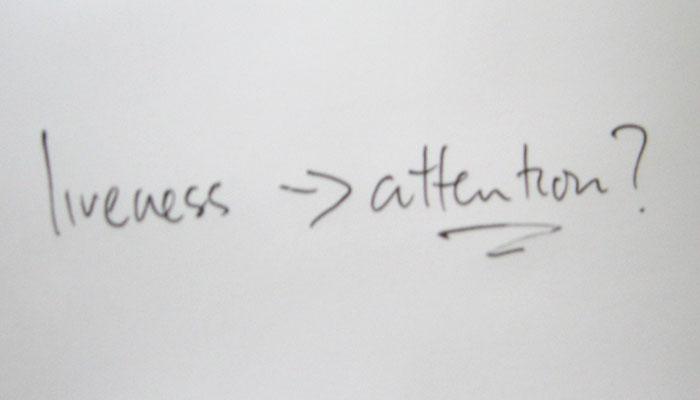
thankfully the viva was like a good supervision session rather than a critical demolition. if only i had actually pressed the record button on the dictaphone app like i thought i had. possibly the best insight came right at the end, almost as an afterthought from my drama supervisor: its really all about attention.

in the written feedback:

The committee were impressed by the amount of work done and the quality of the literature review. This draws together some very interesting material and combines it well and shows good critical powers.

yay! ah - but these things always seem to have some kind of “subject to the usual corrections” clause. and, lo, mine does:

The committee requested that a revised submission should be made for a second review. No new reading is required, it is much more about refining the way the research issues are presented and giving a clear, coherent and tractable focus. There’s a lot of good work already done here but it would benefit from being sharpened. Specifically:

  1. Produce a new section that provides a clearer definition of the research
    questions and, in particular, a significant narrowing of the background concept
    of ‘liveness’ to a more conceptually and empirically tractable, and thus more
    focussed, issue (see below).
  2. Provide a new section that explains the methodological approach and, in
    particular how the initial system requirements / design will be motivated.
  3. Provide some discussion of how the work will link coherently - in terms of
    both key concepts and methodological strategies - between potentially diverse
    field environments.

diary | 20 jun 2011 | tagged: liveness · phd · research · qmat

dtc meetup II: docfest

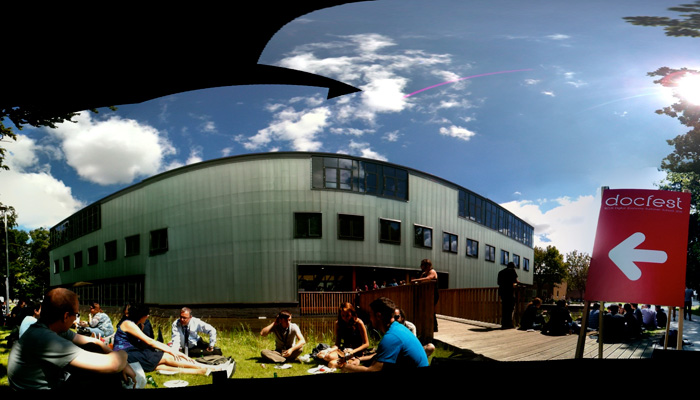
after nottingham, this time its to highwire at lancaster for the yearly gathering of the digital economy doctoral training centres. it was almost demoralising: we find a green field site and a wonderful brand new dedicated building designed and constructed seemingly in the blink of an eye. not the kind of trick that is possible at queen mary, campus crammed in london’s east end.

diary | 14 jul 2011 | tagged: research · qmat

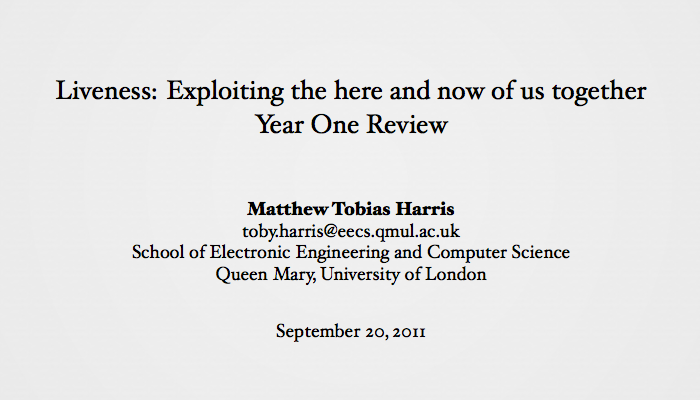
one year review » a rounded representation

it might have been finished on the plane out to holiday, but i and it got there.

[Supervisor] Of course, I think you do still need to do significant work to disentangle some of the different threads of reasoning that are now in the introduction. In fact, I recommend a complete re-write in which you try to do some more careful exposition of the different postitions people have taken.

…ah, the phd process. just when you’re happy you’ve got somewhere and achieved something, its back to square one: if better armed, and more skilled (the writing is getting better).

[removed document, as academic web services kept on trying to attribute to me, which while correct is a mis-representation given later development]

diary | 21 sep 2011 | tagged: liveness · phd · research · qmat

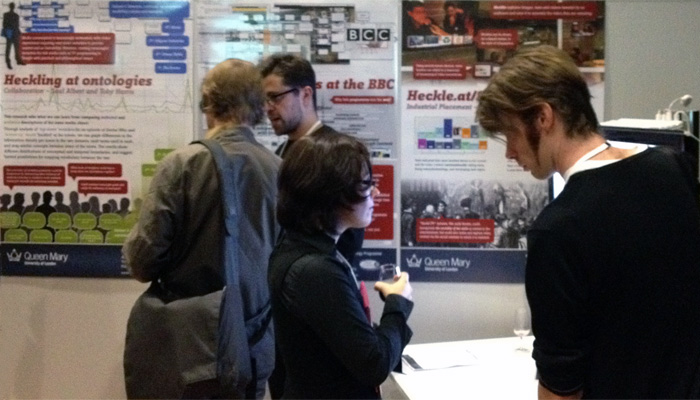
heckling at ontologies demo

to newcastle to the all-hands meeting of the digital economy programme, aka where my funding comes from. the summer had seen an internship project use the data i had generated in my bbc internship the year before, and from this me and saul got talking about how that could go further. importantly for me, in the demonstration proposal for it, the first bit of writing i’ve been happy with.

it also meant i could get back to the visualisation i’d made for the bbc project, and tie the display of the story-world information to the playing video. and my, how browsers have come on: processing.js, fonts and the canvas element are now happy bedfellows, and will happily alpha-blend over smooth playback of a movie. check it on github

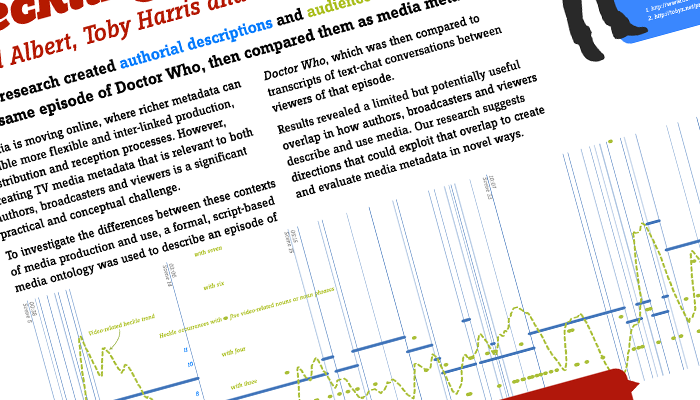
Media consumption is increasingly networked, with richer experiences requiring ever-richer metadata to provide context and so link-ability. However creating meaningful metadata for rich media such as TV programming is fraught with practical and philosophical issues, starting with just who has the time to make it anyway. Through two Media & Arts Technology DTC internship projects – with the BBC (2010) and BT (2011) – two very different sets of metadata have been created that, representing the same TV programme, provide an interesting opportunity to investigate these issues. In one set we have a semantic, authorial representation modelling the content and narrative, in the other a free-text aggregation of mediated conversation about the programme by viewers. As the programme plays, we can compare viewers’ utterances with the TV production’s own modelling of the content.

Our demonstration will be an installation that plays the TV programme – an episode of Doctor Who – with corresponding animation juxtaposing the two sets of metadata. Our research agenda centres around the practical benefit of a mixing the two approaches in creating metadata and exploring the dissonance between the two representations. In short: how much top down do you need to make the bottom up work (or should that be the other way around?); where do attempts to map one to the other fall back to attempts to find some tractability fall back to conclusions that one or the other representation is invalid (and if so, which one – a librarian’s fantasy exposed or interactions ill-suited to being co-opted).

We would gladly host a ‘Heckle at Who’ session, where delegates will watch the TV programme and use their mobile device to contribute to the conversation around the programme. We could even turn this into semantic bingo: can we produce meaning from their utterance derived from the semantic modelling work. This would be well-suited to an evening, social activity.

diary | 15 nov 2011 | tagged: triplestore · processingjs · html5 · talk · heckling at ontologies · research · qmat

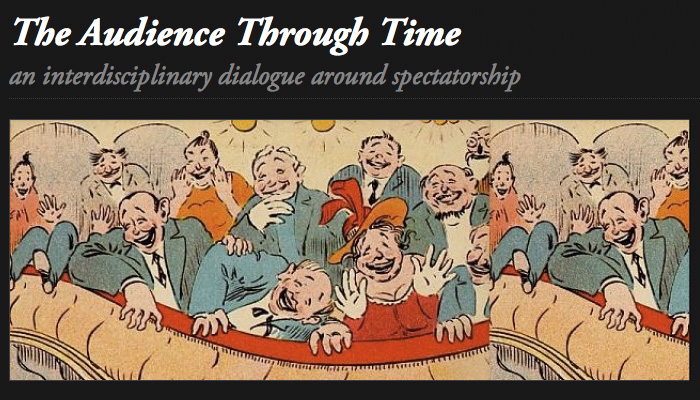
the audience through time

an early saturday start to attend the ‘audience through time’ conference organised by the drama department at queen mary. it was a good effort, and my chairing of the ‘technology and liveness’ panel seemed to go down well – phew. i especially enjoyed martin barker’s talk, which was spot-on topic for me and presented with gusto: motivated by the issue of ‘liveness’ it started by asking how do audiences make sense of and respond to the near-live quality of streamed performances in cinemas, but soon progressed to an empirically backed provocation of a ‘scandal to theory’ that really showed the value of crossing disciplines.

its interesting seeing the different conventions of the disciplines at play, and i still cannot reconcile my love of the debate in drama seminars i have attended with the seeming pointlessness of reading out densely worded performance theory papers verbatim to a darkened hall (ref. my aside about auslander). something to ponder more, for i am one of the organisers of another conference on audience coming this may

diary | 03 dec 2011 | tagged: liveness · research · qmat

the ends of audience

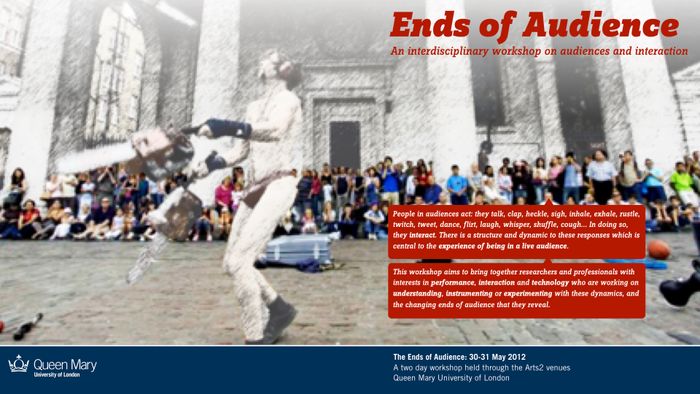
we’re organising a workshop on live audiences at queen mary. it’s conceived around opening conversations across disciplines. here’s the call –

People in audiences act: they talk, clap, heckle, sigh, inhale, exhale, rustle, twitch, tweet, dance, flirt, laugh, whisper, shuffle, cough… in doing so, they interact. There is a structure and dynamic to these responses which is central to the experience of being in a live audience. This workshop aims to bring together researchers and professionals with interests in performance, interaction and technology who are working on understanding, instrumenting or experimenting with these dynamics, and the shifting ends of audience that they reveal.

We invite proposals for oral presentations, live demonstrations, installations and performance experiments that explore the nature of interaction in audiences. We especially welcome interventions, participatory formats and creative approaches to convening workshop sessions. Topics include but are not restricted to:

  • the dynamics of collective and individual experiences of performance,
  • the communicative organisation of audience-audience interaction,
  • non-verbal interaction and emotional contagion,
  • remote and co-present audience interactions,
  • the phenomenology of audience interaction,
  • changing historical and cultural understanding of the audience,
  • technologies and methods for sensing audience dynamics,
  • technologies and methods for enhancing and manipulating audience engagement.

http://qmedia.qmul.ac.uk/audience

diary | 17 dec 2011 | tagged: research · qmat · ends of audience | downloads: Ends of Audience Flyer.pdf

designing for liveness position paper

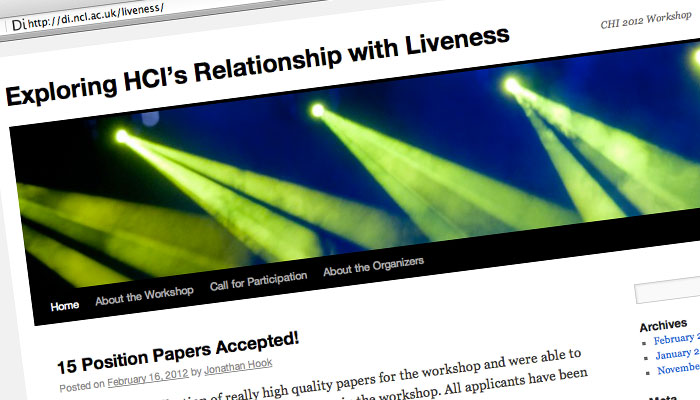
the best thing you can be asked to after spending a year getting to grips with a phd and producing a document of goodness knows how many words is to take that and boil it down to two sides. thanks to newcastle’s culture lab (any surprise?/)for cornering me into this by proposing a workshop on liveness at the premier conference on human factors in computing. and best of all: my position paper has been accepted.

In the literature on liveness there is a surprising paucity of studies that look directly at the character of interactions between audience members. Partly as a consequence of this, technological interventions in the live experience have focussed primarily on enhancing the performers’ ability to project aspects of their ’act’ or on enriching the ‘generic’ audience experience. We argue that the dynamics of the interactions amongst audience members is key to the experience of a live event and that if we attend to this directly new opportunities for technological intervention open up.

diary | 16 feb 2012 | tagged: liveness · phd · qmat · research | downloads: tobyharris-livenesshci.pdf

heckling at ontologies redux

lying with statistics is oh so easy, intentionally or otherwise. the graph on the previous poster showed… a correlation so great it instantly raised suspicion. rightly so, and so back to the data to make something not only more rigorous but more expressive. turns out it takes waaay longer, not just doing the first thing that comes to mind, and doing it well. ditto for the prose: much butchering of each other, it being a joint effort between saul and i.

diary | 05 apr 2012 | tagged: heckling at ontologies · research · qmat

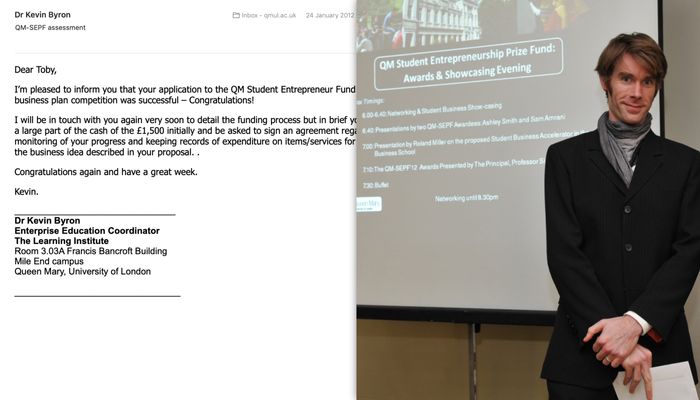
student entrepreneur fund awardee

huzzah: cash to prototype the mixer.

diary | 25 apr 2012 | tagged: qmat · dvi-mixer

the live in live cinema redux

from the big revision of the presentation to a write-up that took it in a quite different direction to now: a ground-up re-write. a scholarly work that builds an argument and from the theory offers provocations back to the practice. spoiler: smartphone screens. tl;dr: play your audience not your computers. put out there in a spirit of debate: all crit welcome!

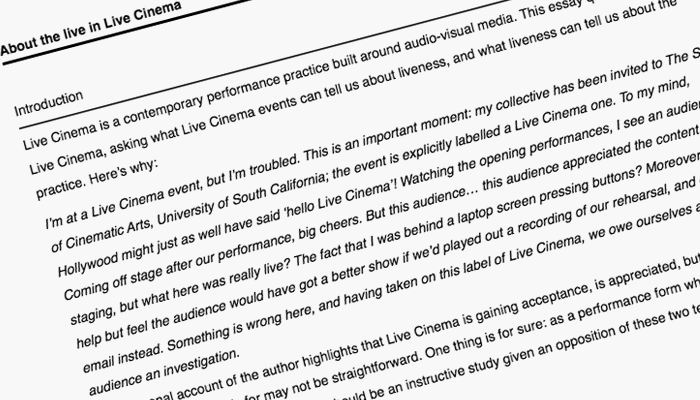
Live Cinema is a contemporary performance practice built around audio-visual media. This essay questions the ‘live’ in Live Cinema, asking what Live Cinema events can tell us about liveness, and what liveness can tell us about the practice. Here’s why:

I’m at a Live Cinema event, but I’m troubled. This is an important moment: my collective has been invited to The School of Cinematic Arts, University of South California; the event is explicitly labelled a Live Cinema one. To my mind, Hollywood might just as well have said ‘hello Live Cinema’! Watching the opening performances, I see an audience rapt. Coming off stage after our performance, big cheers. But this audience… this audience appreciated the content, the staging, but what here was really live? The fact that I was behind a laptop screen pressing buttons? Moreover, I can’t help but feel the audience would have got a better show if we’d played out a recording of our rehearsal, and checked our email instead. Something is wrong here, and having taken on this label of Live Cinema, we owe ourselves and our audience an investigation.

This personal account of the author highlights that Live Cinema is gaining acceptance, is appreciated, but answering what that appreciation is for may not be straightforward. One thing is for sure: as a performance form whose ‘product’ is media and whose ‘draw’ is liveness, it should be an instructive study given an opposition of these two terms has shaped much of the literature on liveness.

diary | 29 apr 2012 | tagged: live in live cinema · research · qmat · live cinema

austin office hours

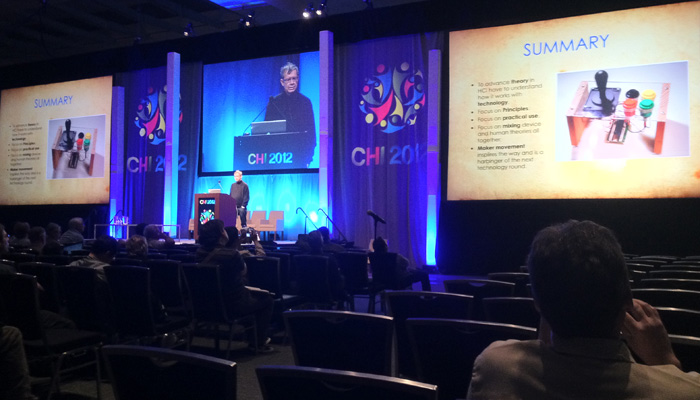
CHI 2012 conference in full swing. i was attending for the liveness+HCI workshop; posting this has got so delayed a longer write-up will have to wait for some other catalyst.

diary | 12 may 2012 | tagged: research · qmat

eofa » programme

hot off the digital anvil: the programme for ends of audience.

Pat Healey, Martin Welton, Michael Schober and Lois Weaver – Introduction

Laurence Payot – Performing Audiences: Experiments in Real Time

Paul Tennent, Sarah Martindale, Stuart Reeves, Joe Marshall, Brendan Walker, Steve Benford – Exposing your still beating heart: introducing biodata to the audience experience

Coffee break

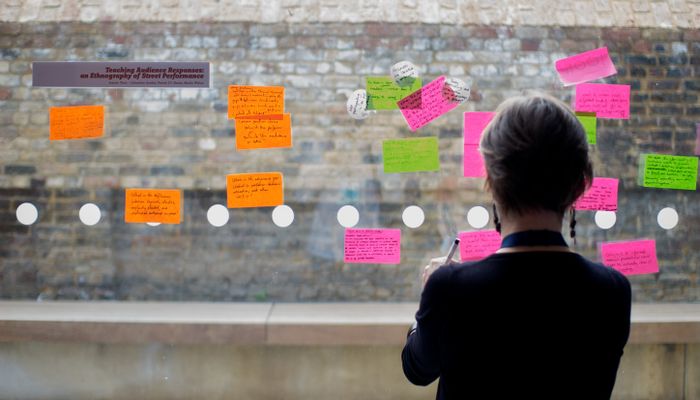
Colombine Gardair, Patrick G.T. Healey, Martin Welton – Teaching Audience Responses: an Ethnography of Street Performance.

Judy Batalion – The Live Comedy Audience

Christian Heath & Paul Luff Audience, Participation and the Legitimacy of Events: Auctions of Fine Art and Antiques

Lunch

Keynote – Christoph Bregler – The Eye of the Crowd: Capturing, Sourcing, and Playing with Audiences.

Laurissa Tokarchuk, Matthew Purver, Stuart Battersby – Using social data to understand live festival audiences

Eirini Nedelkopoulou – The Phenomenology of Audience Interaction in Mixed-­Media Performance

Coffee break

Mariza Dima – MOBILE Stories: Exploring audience engagement through interactive mobile storytelling

Aneta Mancewicz, Joshua Edelman – Watching the Watching of Shakespeare

Short break

Q&A Debrief


Drink Reception & Dinner –
including Elbows on the Table by Valeria Graziano & Valentina Desideri and short talk by Barry Ife

Fair –
Angela Fernandez Orviz – New Models for Audience Engagement
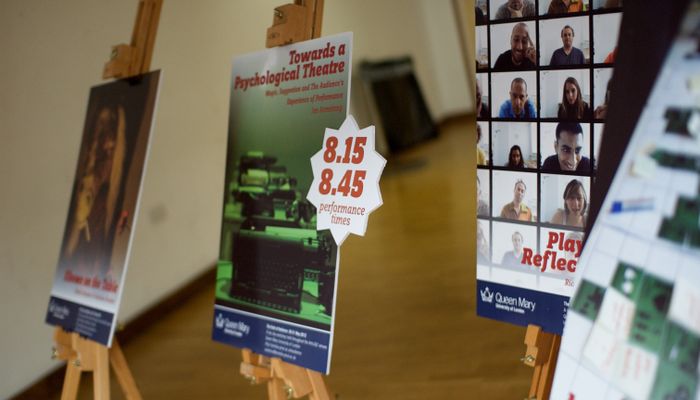
Jon Armstrong – Towards a Psychological Theatre – Magic, Suggestion and The Audience’s Experience of Performance
Rachel Gomme – Mouth to Mouth
Ria Hartley – Play/Pause/Reflect/Submit
Kavin Preethi Narasimhan and Arash Eshghi – Watch it, we’re around


Keynote – Louise Blackwell & Kate McGrath – Producing fresh work for adventurous people.

John Sloboda and Helena Gaunt – Understanding audiences: helping creative artists to obtain richer information from their audiences.

Joslin McKinney – Empathy and Exchange: Audience Experience of Scenography

Johanna Linsley and Jan Mertens – The Library of Expectations

Coffee Break and Q&A session

Kim Skjoldager-Nielsen – Risky Interaction – Staged identity in SIGNA’s Salò

Anna Wilson – Ontroerend Goed’s The Audience

Philip Watkinson – A Mirror Staging: A Lacanian performance analysis of Romeo Castellucci’s On the Concept of the Face, Regarding the Son of God and its impact on the audience.

David Wiles – Picturing the historical audience

Lunch

Atau Tanaka – Music One Participates In

Isaac Schankler, Alexandre François and Elaine Chew – Mimi4x and Game Pieces: Creating an Audience of Performers

Coffee Break

Terri Power – Shakespeare’s Audiences

Graham White – Philosophical Theatres: From Descartes to Phenomenology

Orion Maxted – BANANA

Q&A Debrief

Short Break

Keynote – Nic Ridout – The Ends of Ends of Audience

Closing and Goodbyes

diary | 29 may 2012 | tagged: research · qmat · ends of audience | downloads: Ends of Audience Programme.pdf

eofa » day one

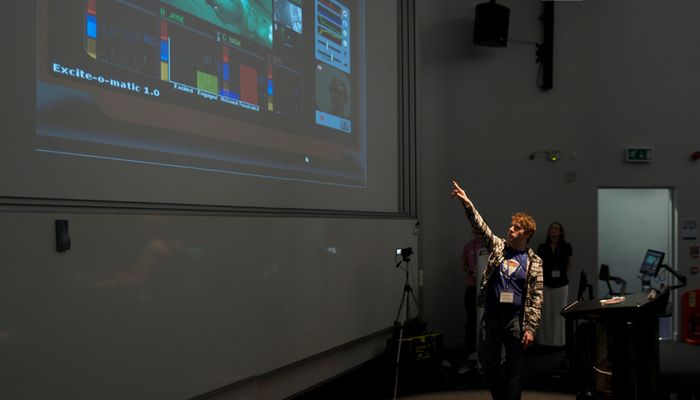
the workshop kicks off. of course i recreated the flyer design with a live camera feed of the audience. here, we have the ‘excite-o-matic’ of ‘exposing your still beating heart: introducing biodata to the audience experience’, roughly this paper.

diary | 30 may 2012 | tagged: research · qmat · ends of audience

eofa » questions and answers

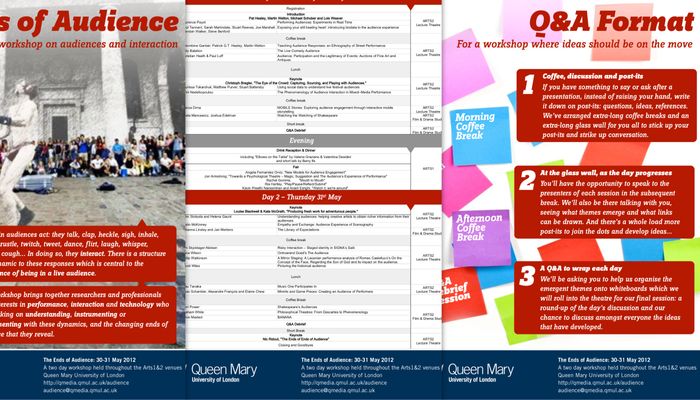
we made a ‘q&a format for a workshop where ideas should be on the move’. here we have colombine reading questions and responses to her talk ‘teaching audience responses: an ethnography of street performance’. and, crucially, adding responses of her own, building a conversation and noting people to follow up with.

diary | 30 may 2012 | tagged: research · qmat · ends of audience

eofa » q&a debrief

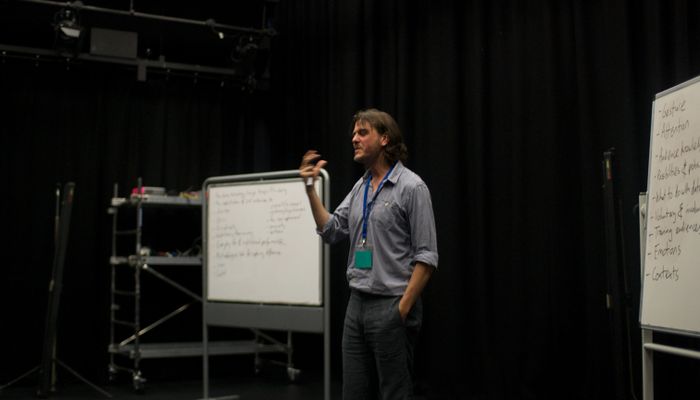
martin welton drawing threads through the day and hosting an open discussion prompted by the q&a post-its.

diary | 30 may 2012 | tagged: research · qmat · ends of audience

eofa » fair

drinks reception, dinner: of course. but also a fair, with performances, demos, and allsorts.

diary | 30 may 2012 | tagged: research · qmat · ends of audience

eofa » ends of ends of audience

nic ridout summing up the conference with extemporaneous flair.

diary | 31 may 2012 | tagged: research · qmat · ends of audience

the d-fuser in four minutes

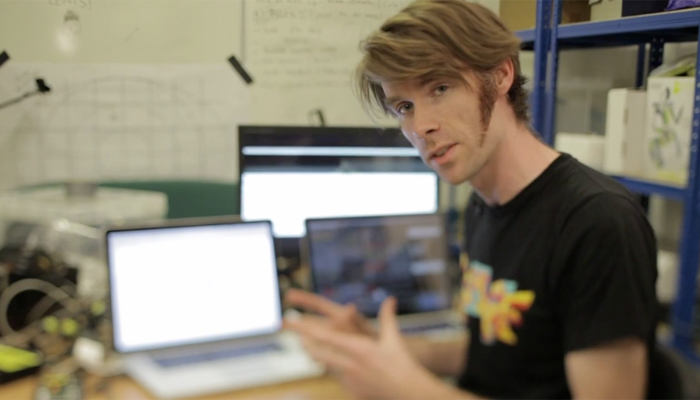
after being one of the forces behind qmedia’s inaugural open studios last year, this year i was playing behind-the-scenes fixer, and with things fixed was able to get a few hours hacking on the dvi mixer before the show wrapped. even better, having established last year the reward of documentation, there was now a film crew looking intrigued and asking me to explain my research…

diary | 01 jun 2012 | tagged: qmedia open studios · qmat · vj · dvi-mixer

twelve minutes on all my phd

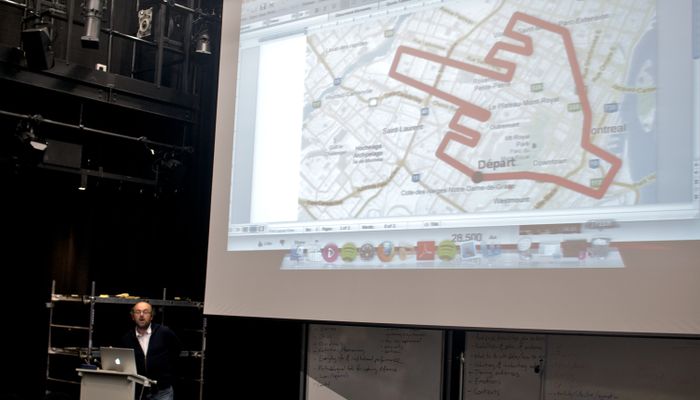
to oxford for the ‘Inaugural RCUK Digital Econmy Theme CDT Student Research Symposium’, ie. gather the guinea-pigs and see what they’re up to. happy to regain the overview of my research though, and working on a presentation is so much more enjoyable a process than writing for me.

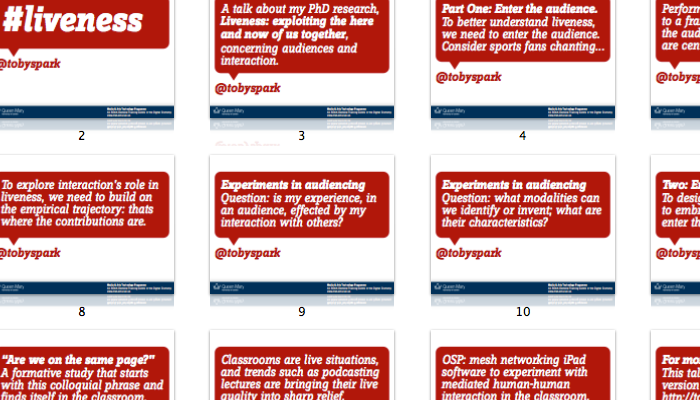
given my research is on liveness and lecturing comes into it, there had to be a punchline or some way for the act of presentation to be reflexive of its subject. so the slides ended up looking like tweets, and they sent themselves out hashtagged up as parcels of backchannel fodder. unfortunately i didn’t realise the script i found wasn’t clever enough to parse multiple tweets per slide until afterwards, so all the links and asides that went with each slide didn’t get out, which was kinda the magic i wanted to happen - as if i was talking on two levels with two modalities at once. brushing off my applescript, that is now fixed and available for all.

diary | 03 jul 2012 | tagged: liveness · phd · qmat · research · talk | downloads: tobyharris-livenessresearchpresentation-v01-tweets.pdf · tobyharris-livenessresearchpresentation-v01.pdf

1

2

3

4