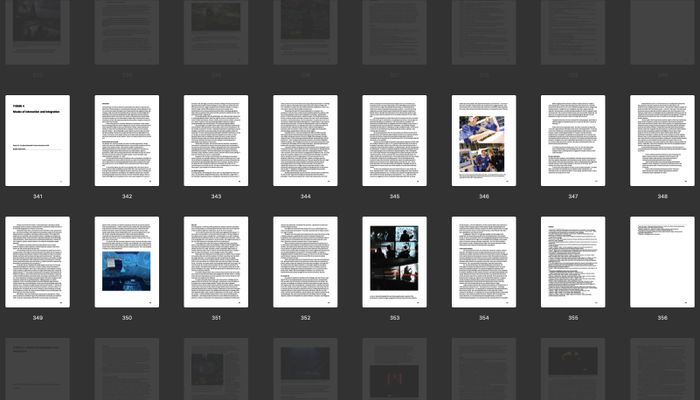
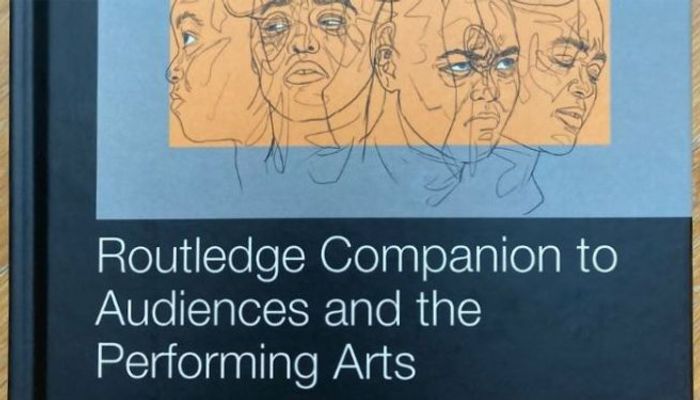
i’m a co-author of Audience Interaction: Approaches to researching the social dynamics of live audiences, a chapter in the Routledge Companion to Audiences and the Performing Arts. at some point, it got a top to bottom re-write from pat, my phd supervisor. the topic being pretty much that of my phd, witnessing this re-write was quite something. for all those hours of supervision discussing, probing, honing… this is the distilled version of what was in his head; squint, and it’s as if he got to write my thesis instead. i’m proud of what i wrote and i think it holds up, so this was wild, in a good way. like watching a grand master, able to appreciate every detail.
Live events are social encounters: people in a live audience do not just react to a work, they react to the people around them. Other people’s laughter, applause, coughing, fidgeting, in-breaths and silences all contribute to the experience of live events. Importantly, these behaviours are not just clues to people’s inner responses – they are public social signals that are actively interpreted by others. As a result, there are a number of connections between the organisation of large-scale audience interactions and small-scale social interactions like conversation. These connections provide a useful way of thinking about the dynamics of audience responses. It has implications for what responses we focus on, how we measure them and how we model them. It helps to explain how responses develop and propagate through an audience. It also changes our understanding of what influences people’s moment-by-moment experience of live events; performers and audience members alike.

 About
About


 Projects
 Diary
Diary